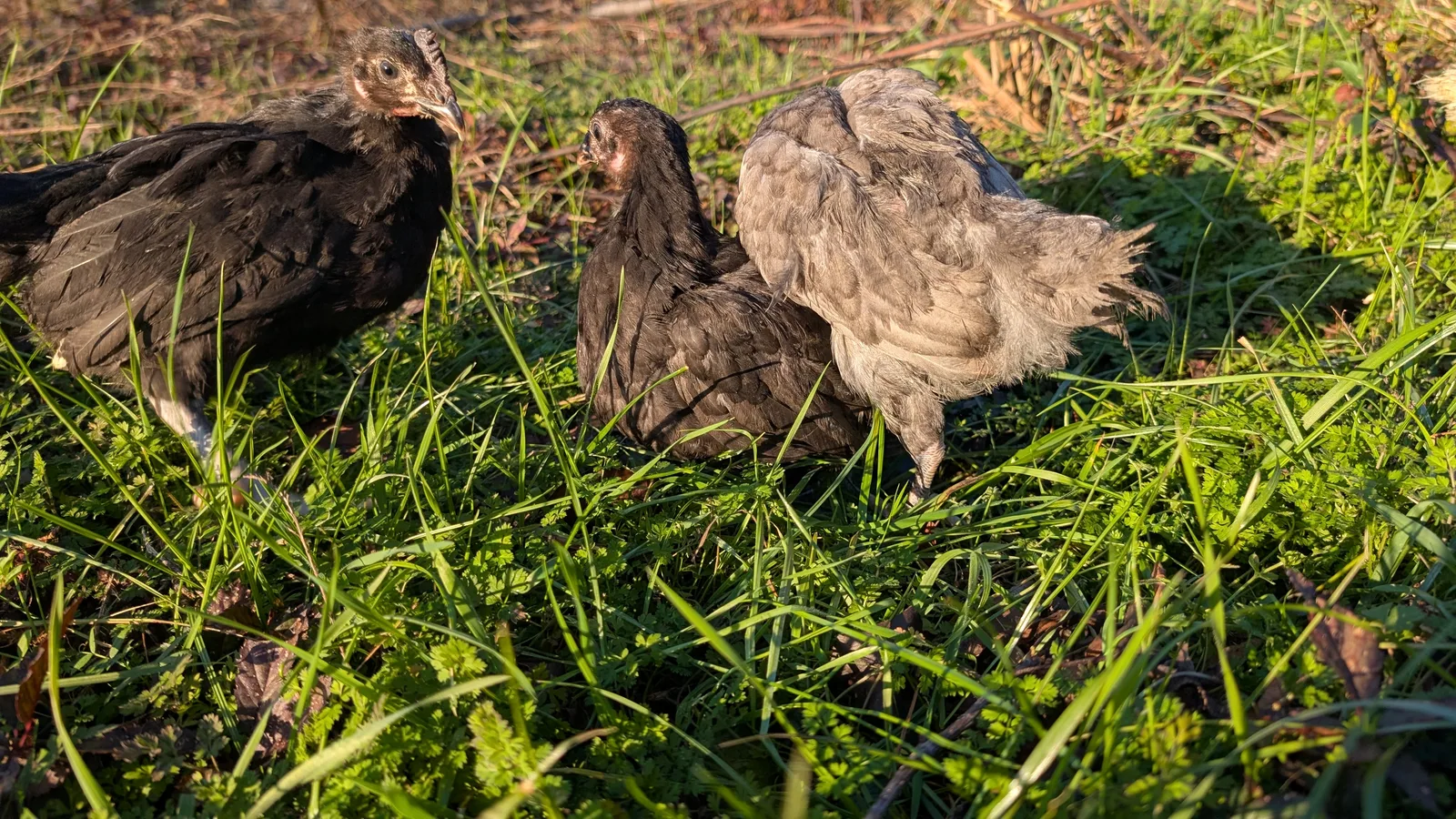
Raising American Bresse runs in five stages. Brood at 95°F, stepping down, for six weeks. Open the coop door. Train the flock onto pasture with a feeder schedule. Sort cockerels at 8 weeks, 8–10 at the outside. Finish table birds so they are ready at 14–19 weeks. Pullets start laying around 18–22 weeks.
What does the raising path look like, start to finish?
Five stages, each with one job. Brooder: weeks 0–6. First range: weeks 6–10. Full pasture: weeks 10–16. Finishing: weeks 14–19 for table birds. Laying flock: week 20 on. Everything famous about this breed is built in one of these windows. The list below is the backbone of the whole guide.
- Weeks 0–6 · The brooder Warmth, clean water, good starter feed, and calm daily handling. Plan the exit early. Nothing here is breed-specific except the goal: get them outside soon.
- Weeks 6–10 · First range The coop door opens onto a protected run. The first days they dart out and back. Within a week they spend most daylight outside, learning to hunt.
- Weeks 10–16 · Full pasture Range grows. Feeders go on a schedule. Forage replaces a growing share of the feed. Muscle and base flavor build here. Cockerels sort out at 8–10 weeks.
- Weeks 14–19 · Finishing Table birds move to a quiet pen and richer feed. Fat weaves into the muscle. This craft separates a Bresse dinner from a plain farm chicken.
- Weeks 20+ · The laying flock Pullets start laying around 18–22 weeks. Expect 200–250 cream eggs a year. Your best birds become next season's breeding pens.
This guide assumes you already know the breed: the standard, the varieties, the slate-blue legs. Still learning, or still need birds? Start with the breed's home and national breeder directory at AmericanBresse.com. Then come back and raise them. Every new keeper who raises a flock adds one more safe home for the breed.
How do you brood American Bresse chicks?
Brood them like any chick. Hold 95°F under the heat source in week one. Drop about 5°F each week until room temperature, around week five or six. Give clean water, a 20–22% protein starter, and dry pine shavings. Start with about half a square foot per chick. Plan for a full square foot by week three. They outgrow a brooder fast.
| Week | Under the heat | What you should see |
|---|---|---|
| 1 | ~95°F | Chicks spread evenly, chirping softly, sleeping flat |
| 2 | ~90°F | More exploring, first wing feathers |
| 3 | ~85°F | Perching attempts, dust-bathing in bedding |
| 4 | ~80°F | Backs mostly feathered, heat zone often ignored by day |
| 5–6 | 75°F → ambient | Fully feathered; heat off in mild weather, day trips outside begin |
Read the birds before the thermometer. Piled under the heat means too cold. Pressed to the far edges and panting means too hot. Spread out and busy means just right. One choice here is breed-specific: the exit plan. Give chicks a coop door and outside time around six weeks. Keepers find those chicks become better rangers for life. They forage harder and turn pasture into growth.
How do you teach them to range and forage?
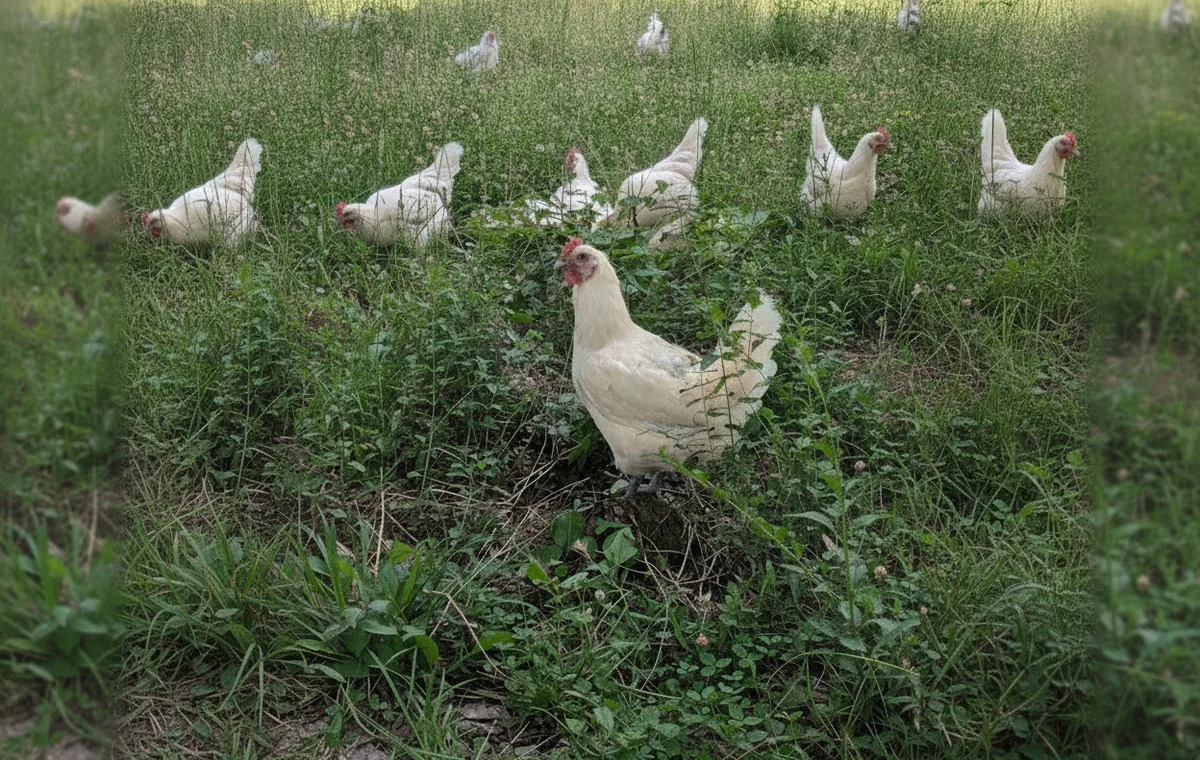
Use the feeder schedule, not encouragement. Feed a measured breakfast. Lift or close the feeders through the middle of the day. Hunger points the flock at the yard. Refill in late afternoon so every bird roosts with a full crop. Two or three weeks of this turns curious young birds into working foragers.
Grow the territory as the birds grow. Use a bigger paddock, rotated sections, or watched free range. Match it to your predator pressure. Rotation keeps forage fresh and worm loads down. Track feed use weekly; on good range the number falls as forage takes over, and that drop is what makes the breed's costs work. The full feed details live on the feeding page.
This is why the breed rewards good management. A Cornish Cross raised poorly and one raised well taste about the same. An American Bresse raised poorly is just a nice backyard chicken. Raised with room to range, a feeder schedule, and a careful finish, it is something else. It is the reason France protected the parent breed by law. What you control shows up on the plate.
When do you sort cockerels from pullets?
Sort at 8 weeks, or 8–10 at the outside, when the males announce themselves. Younger is better. They spar, crowd the feeder, and pester pullets. Split them into groups and everyone calms down. Table cockerels head toward the finishing pen. Pullets grow on toward lay. The most promising male grows out alone as a possible breeder. Write the sort weights down on the one-page flock record so the call is made with numbers. The sort repeats at every grading point after that: 12, 14, 16, 19, and 22 weeks. A bird not moving forward in breeding moves toward the table. Keeping males is its own subject. Temperament, ratios, and the table decision are covered in the rooster guide.
Take the guide with you
The whole guide lands in your inbox: all 6 chapters. Then the working emails start, one job at a time: penciling the budget, switching feed phases on schedule, making the keep-or-table call. They run until a French-quality table bird comes off your own ground.
What happens in the final weeks before the table?
Table cockerels leave the range flock for a quiet finishing pen. The feed turns richer. Fat grows through the muscle, not just under the skin. That is the marbling the breed is famous for. Read readiness by hand, not by calendar. Feel for fat at the breast and flanks. Look for supple, thickening skin. Watch weight gain level off. Done the traditional way, the whole arc lands at 14–19 weeks.
Two notes for planning. First, finishing is a deep craft. Rations, routine, readiness checks: more than one section can carry. Second, there is no deadline. A commercial hybrid must be processed on time or you lose birds. An American Bresse held past its window costs you only a little tenderness, so a busy week never costs you birds.
Raising questions, answered
How long does it take to raise American Bresse chickens?
Plan on 14–19 weeks from hatch to a finished table cockerel. Pullets reach point of lay at 18–22 weeks. The path runs brooder to six weeks, then ranging and growth, then the finishing weeks for table birds.
Are American Bresse hard to raise for beginners?
No. They brood like any chick and handle calmly. What sets them apart is intent. They forage hard. A feeder schedule pushes the flock onto pasture. Table birds get a true finishing stage. Follow the stages and the breed does the rest.
When should American Bresse chicks go outside?
Around six weeks, weather permitting. Open the coop door into a protected run. Birds that start ranging early become better foragers for life. Foraging is where this breed's flavor starts.
How much space do American Bresse need?
Give about 3–4 square feet per bird in the coop and 8–10 in the run. Then add ranging room beyond the pen. For this breed, range is part of the recipe. Activity and varied forage build the base flavor that finishing enriches later.
When do you separate American Bresse cockerels?
At 8–10 weeks, when males begin to spar and crowd the feeder. Younger is better for the sort. Table cockerels head to the finishing pen. Pullets grow on toward lay. The best male grows out alone as a possible future breeder.
How many eggs do American Bresse hens lay?
A good hen lays 200–250 large cream eggs a year. The first eggs arrive around 18–22 weeks. Keep layers ranging. Forage carries into egg flavor and yolk color.